CodeSee: How Code Visibility Transforms Software Development

In modern software engineering, complexity grows faster than documentation. Teams build systems composed of hundreds or thousands of files, multiple services, cross-repository interactions, and distributed APIs. As a codebase scales, understanding it becomes increasingly difficult, and traditional tools—textual code diffs, static diagrams, spreadsheets—fall short. Developers spend large portions of their time simply trying to understand what the code actually is and does. This is where the concept of code visibility becomes essential, and where CodeSee introduces a fundamentally different approach to code comprehension and team collaboration.
The Problem: Invisible Complexity
Software complexity isn’t just a matter of lines of code. It’s about relationships:
- How do different modules interact?
- What services depend on one another?
- How will a proposed change affect functionality or performance?
- Are there hidden dependencies no one has documented?
Without a holistic picture of your codebase, engineers operate blindfolded. Decisions that should be simple—such as where to begin a refactor or how to onboard a new developer—become risky and time-consuming. This lack of visibility slows progress, increases bugs, and makes developers less confident in their choices.
CodeSee’s Mission: Make Code Understandable
CodeSee is a platform built around one core idea: code should not be something you read but something you see. Its goal is to deliver real, practical code visibility—a way to visualize, explore, and understand your software in ways that match how humans think about complex systems. Where documentation fails and spreadsheets fall short, CodeSee’s interactive maps provide clarity.
The platform delivers interactive, automatically generated, and continuously updated visual representations of your codebase, revealing the relationships between directories, files, functions, and services. It brings code to life—turning opaque text into structured, navigable visual maps.
What Is Code Visibility?
The term “code visibility” refers to the ability to see and comprehend the structure, flow, and relationships within a codebase. It’s like having a GPS for your software:
- Instead of guessing where code lives or what it affects,
- You can see how components are connected,
- Understand how data flows through the system,
- And anticipate how changes will propagate.
This visibility is critical in large, distributed, or legacy codebases where documentation is incomplete or outdated. When every developer has access to an updated visual overview of the code, team coordination improves and technical decisions become data-driven rather than speculative.
What CodeSee Does: Maps, Reviews, and Insights
At its core, CodeSee automates the creation of interactive, visual maps of your codebase. These maps serve multiple purposes throughout the software lifecycle:
1. Codebase Maps: A Bird’s-Eye View
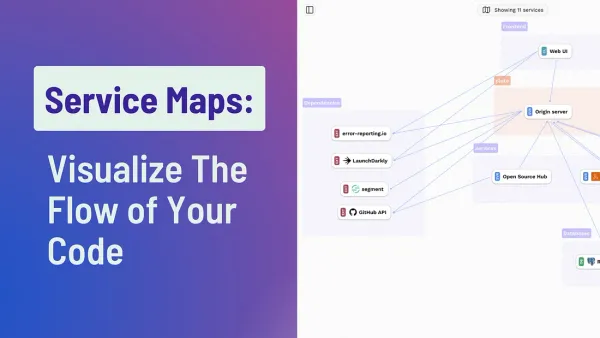
Codebase maps are interactive diagrams that depict the structure of your code. They reveal:
- How services and modules relate to each other,
- How directories and files depend on one another,
- Which parts of the code are most active or most recently changed.
These maps act as a visual mental model of your application, helping developers navigate a project without diving into text files line by line. By providing visual context, CodeSee reduces the cognitive load associated with understanding complex systems.
The maps are not static diagrams that require manual updates. Instead, they are automatically generated and updated as your code evolves. This means teams always have an up-to-date visualization without dedicating time to documentation maintenance.
2. Review Maps: Smarter Code Reviews
One of the most painful parts of modern development is the pull request (PR) review. Traditionally, reviewers scan lists of changed files and commented diffs, often in alphabetical order rather than logical sequence. This process hides context and drains productivity.
CodeSee’s Review Maps change that by presenting PR changes visually. Review Maps show:
- How the files in a change relate to each other,
- The dependencies that matter most,
- Logical clusters of files that should be reviewed together.
This visual approach allows reviewers to understand changes holistically rather than piecemeal, making reviews faster, more thorough, and more intuitive. As a result, teams can improve quality without increasing review effort.
3. Maps as Knowledge Artifacts
Maps in CodeSee aren’t just diagrams; they become living knowledge artifacts. Teams can annotate, add context, and collaborate around them. Developers can:
- Create interactive tours that guide colleagues through specific parts of the code,
- Highlight architectural patterns or tech debt areas,
- Embed insights and explanations directly into the map.
This collaborative layer means knowledge is stored visually, eliminating the need for separate internal documentation tools and reducing the “bus factor” on critical parts of the codebase.
Why Visual Understanding Matters
Most developers will agree: understanding code is one of the hardest parts of software development. Estimates suggest that developers spend a majority of their time simply trying to understand what existing code does before writing new functionality. Visualizing code changes this dynamic in several impactful ways:
Faster Onboarding
New team members typically spend weeks getting up to speed with unfamiliar code. Traditional onboarding requires reading documentation and source code and asking other developers for context. With CodeSee, new engineers can begin with a visual map that shows the structure of the application and relationships between components. This accelerates onboarding and reduces reliance on tribal knowledge.
Confident Refactoring
Refactoring is risky because developers rarely understand the full set of dependencies affected by a change. A map makes those dependencies visible, enabling more confident planning and execution. Before changing any component, developers can see exactly what will be impacted and adjust their approach accordingly.
Improved Code Reviews
Visualizing changes elevates the code review process. Instead of scanning lists of files, reviewers get a clear sense of how changes affect the system holistically. This shift from text to structure reduces errors and increases review speed.
Collaboration Across Teams
Maps are not just for engineers. Tech leads, architects, and even non-technical stakeholders can gain insight into system architecture. This shared understanding improves cross-functional discussions and ensures alignment on system decisions.
How CodeSee Works
One of the strengths of CodeSee is that it integrates seamlessly into existing development workflows without requiring developers to overhaul their tools.
Here’s how it typically works:
- Connect to your repository: CodeSee integrates with GitHub and analyzes your codebase directly from your repository. Your code stays on GitHub; CodeSee does not store your code on its servers. This model prioritizes security and privacy.
- Generate maps automatically: Once connected, CodeSee generates visual maps of your code structure. These maps reflect the dependencies and organization of your files and services.
- Use review maps on pull requests: With every pull request, Review Maps are automatically generated to show the impact of changes visually.
- Annotate, share, and collaborate: Teams can annotate maps with additional context or create interactive tours to capture knowledge directly tied to the code.
Toward the Future: AI and Code Understanding
CodeSee continues to evolve toward even deeper code comprehension. Recent enhancements include AI-powered capabilities that allow natural language queries over your codebase. This means developers can ask questions like “How does authentication work?” and receive insightful responses paired with visual guides. These capabilities aim to make code understanding even more intuitive and accessible.
Conclusion: Mapping the Path Forward
CodeSee addresses a fundamental challenge in software engineering: the opacity of complex codebases. By transforming code from text into interactive visual maps, CodeSee empowers teams to understand, collaborate, and ship quality code faster. Its visual approach reduces guesswork, improves onboarding, enhances code review efficiency, and captures knowledge that would otherwise be lost in scattered documentation.
In a world where code complexity continually increases, tools like CodeSee help teams navigate that complexity with confidence. By replacing blind exploration with clear, intuitive maps, CodeSee turns uncertainty into insight—helping developers focus on innovation rather than interpretation.
Source :